Tour Itinerary
Birla Temple
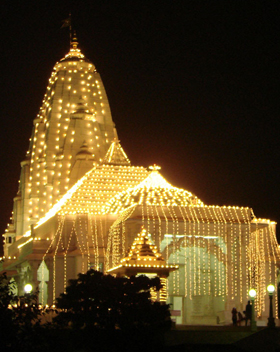
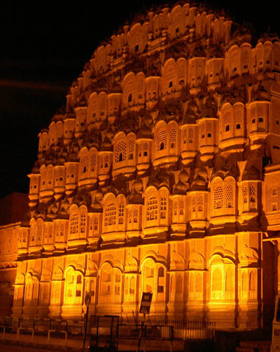
The best time to visit this temple is between the months of October to March. In this temple, 'Janmashtami', the birth anniversary of Lord Krishna, is celebrated with great enthusiasm and gusto; that is the time you would witness the glamour of this temple at its fullest scale. The regular visiting hours are between, 8.00 AM to 12.00 Noon and 4.00 PM to 8.00 PM every day. At night, one can witness the temple illuminated beautifully, against the dark skyline.
Albert Hall Museum
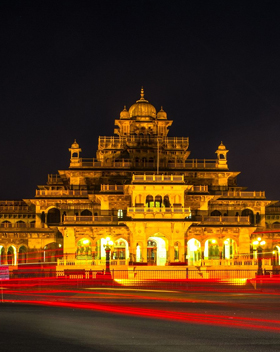
Centrally located in the midst of lush Ram Niwas Gardens of Jaipur, Albert Hall Museum is a treat to eyes for the passersby as well as those visiting the museum interior. The an assortment of rare articles, real war weapons, paintings, magnificent carpet and the Egyptian mummy during the day time offer a mesmerizing experience to the museum visitors. Time to rejoice that the central museum will now be open for Night Tourism on the line of Amer Fort and City Palace!
For the night tourism, the exterior, passages and corridors have been illuminated with glorious colourful lights.
The introductory ticket price for the same would be Rs 100 for both domestic as well as foreign tourist. Now enjoy the magnificence of Rajasthan’s oldest museum in new glory amid the lush gardens under starry sky of night.
Amber Palace
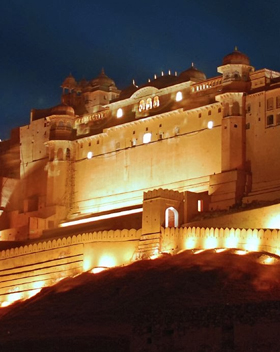
The 16th-century Amber Fort in Jaipur has now been opened for viewing at night to promote night tourism in the city.
‘Amber by Night,’ initiated recently by the Department of Art and Culture, presents a spectacular and mesmerising view as sombre lights illuminate it in various intensities. Different hues of coloured light lend a new perspective to the fort’s ambience and elegance.
Open from 7 pm till 10 pm, ‘Amber by Night’ offers a vibrant tour of Jaleb Chowk, Diwan-e-Aam, Mansingh Mahal and Sheesh Mahal to the visitors. The facility is enhanced with lights, fixtures, additional security and a café to provide a fulfilling experience to the visitors.
Jal Mahal
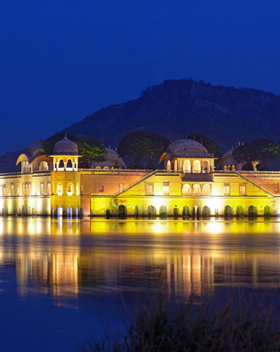
Jal Mahal of Jaipur is a pleasure palace built in the 18th century. Situated amidst the picturesque Mansagar Lake, the palace has the Nahargarh hills forming its backdrop. Jaipur Jal Mahal Palace is an architectural beauty and was meant to be used for the royal duck shooting parties. Developed as an enjoyment spot, it is entered through a causeway situated in the middle of Mansagar Lake. Jal Mahal of Jaipur, Rajasthan is a five-story palace, with the first four floors being submerged under water. The Nahargarh Fort situated nearby offers a splendid view of the lake as well as the palace. You can also get magnificent views of the Jal Mahal place of Jaipur from Mansagar Dam on the eastern side of the lake. The Mansagar Lake is also a bird watcher's paradise as it serves as the home of a variety of local as well as migratory birds. Opposite the palace are the cenotaphs of the royal family.
Night City View From Nahargarh
The Nahargarh Fort was built by Sawai Raja Jai Singh in 1734. Since Jaipur was his capital, the Nahargarh Fort was strategically important and was built as a means of bolstering the defense of Amer. It was also known as the Tiger Fort. New additions were made to the fort in the 19th century by Sawai Ram Singh II and Sawai Madho Singh II. The older parts of he fort are being hard hit by the ravages of times but the newer additions are quite captivating. According to a legend, the Fort was named after a prince whose spirit used to haunt the site and would cause mischief so as to delay the construction of the fort. After too many disturbances, finally after a Tantrik prayer the ghost or the spirit, agreed to leave on the condition that the fort should be named after him.
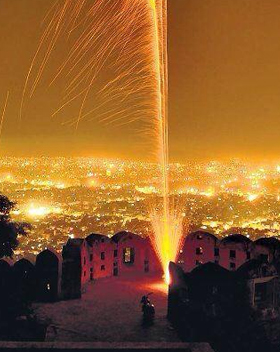
One of the major attractions of the Nahargarh Fort is the view it offers of the Man Sagar lake and the surrounding area. If you are visiting Jaipur, then do take out the time to visit Nahargarh Fort, which stands as a symbol of the royal past and reminds the visitors of the glory of the former age that belonged to kings and Maharajas.